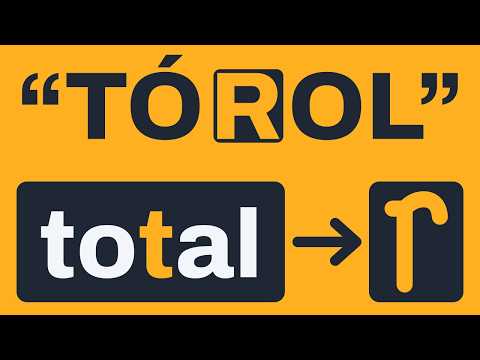
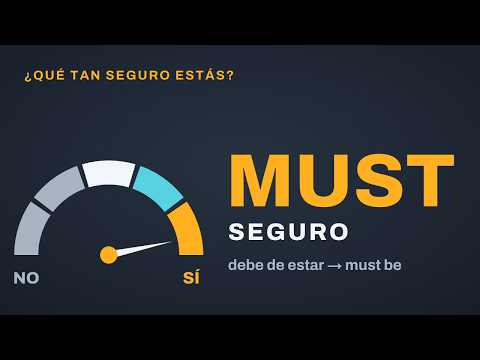
Each of these past modals does a different job. Should've is the right thing to do, but you didn't do it; could've is an option you didn't take; would've is the result you imagine; and must've, might've and can't have are your best guess about the past. In the video, every story sits on a time line: solid cards are what happened (PASÓ), and a dashed branch is what didn't (NO PASÓ) or, in chapter 4, a guess. At real speed they also change: one sentence, three ways, from I should have called., said with care, to I should've called. and, fast, "I shoulda called.", which is still written should've. And where Spanish and English split, the lesson shows the trap: «debí» or «debe (de) haber», «pude» or «podría haber», «si hubiera», and «puede que».
| Inglés | Español | Nota |
|---|---|---|
| You should've set an alarm! | ¡Debiste poner una alarma! | LO IDEAL · NO PASÓ |
| I know. I should've set an alarm. | Ya sé. Debí poner una alarma. | |
| My phone died. I should've brought the charger. | Me quedé sin batería. Debí traer el cargador. | |
| I shouldn't have had that second coffee. | No debí tomarme ese segundo café. | PASÓ |
| You should've had decaf! | ¡Debiste tomarte un descafeinado! | LO IDEAL |
In the first story, she didn't set an alarm and missed the bus: should've means it was the right thing to do, but she didn't do it, so it goes on the dashed branch. Shouldn't have is the other way round: you did it, and it was a mistake, so it sits on the real card, the second coffee, and the better choice, decaf, is the branch. Both take have plus the past participle: should've set, should've brought, shouldn't have had.
| Inglés | Español | Nota |
|---|---|---|
| Oh, you shouldn't have! | ¡No te hubieras preocupado! | = GRACIAS |
| I had to call you. | Tuve que llamarte. | = SÍ LLAMÉ |
| I should've called you. | Debí llamarte. | = NO LLAMÉ |
The chunk Oh, you shouldn't have! isn't a criticism: it's a thank-you, like «¡No te hubieras preocupado!». And «Tenía que llamarte» doesn't say whether there was a call, but English does: I had to call you. means I called, and I should've called you. means I didn't.
| Se escribe | Así suena | Español | Nota |
|---|---|---|---|
| I should've called. | "shoulda" | Debí llamar. | SIN H · ANTES DE CONSONANTE: SIN V |
| could've | "coulda" | podría haber | |
| would've | "woulda" | habría / hubiera | |
| must've | "musta" | debe (de) haber | |
| I should've asked. | Debí preguntar. | ANTES DE VOCAL: SE OYE LA V | |
| I shouldn't have called. | No debí llamar. | NEGATIVA: OJO A LA N |
On paper, it's two words, should have; at normal speed, have shrinks, with no h and just a tiny vowel (should've), and before a consonant even the v disappears: "shoulda". You'll hear the same thing with could've, would've and must've: "coulda", "woulda", "musta". Before a vowel, as in I should've asked., you hear the v, and in the negative, I shouldn't have called., listen for the n.
| Inglés | Español | Nota |
|---|---|---|
| You should've asked them first. | Debiste preguntarles primero. | |
| Yes, I know. I should have. | Sí, ya sé. Debí hacerlo. | |
| I should've called you. | Debí llamarte. | Suenan igual · se escribe should've |
At the end of a sentence, have stays full, as in Yes, I know. I should have. When you speak, should've and "should of" sound the same, so people write it that way, native speakers too. But in writing it's a mistake: write should've, or should have.
| Inglés | Español | Nota |
|---|---|---|
| You could've taken the train. | Podrías haber tomado el tren. | OTRA OPCIÓN · NO PASÓ |
| Yeah. I could've taken the train. | Sí. Podría haber tomado el tren. | |
| You would've been there almost an hour earlier. | Habrías llegado casi una hora antes. | |
| I could've made it on time. | Podría haber llegado a tiempo. | |
| In the end, I managed to make it on time. | Al final, pude llegar a tiempo. | "Pude" dice que sí lo lograste. |
The bus downtown took an hour and a half: could've means it was possible, but you didn't do it (I could've taken the train.), and would've is the result you imagine (You would've been there almost an hour earlier.). «Al final, pude llegar a tiempo» says you did it, so it's managed to; «Podría haber llegado a tiempo» is I could've made it on time.
| Inglés | Español | Nota |
|---|---|---|
| If I'd known about the sale, I would've waited. | Si hubiera sabido lo de la oferta, habría esperado. | SI HUBIERA… · If I'd = If I had |
| If I had known, I would've called. | Si hubiera sabido, habría llamado. | |
| If I'd known, I would've called. | Si hubiera sabido, habría llamado. | |
| If I would've known, I would've called. | Si hubiera sabido, habría llamado. | informal (EE. UU.): lo vas a oír |
| If I'd known | si hubiera sabido | |
| I would've waited | habría / hubiera esperado | |
| I'd have told you, but you were busy. | Te lo habría dicho, pero estabas ocupado. | I'd have = I would have |
Listen to the d in If I'd: here, it means had, and in I'd have, it means would. You'll hear all three if-clauses, but say the second one, If I'd known: If I would've known is informal US English, and you'll hear it. The Spanish maps by clause: «si hubiera sabido» is If I'd known, and the result, «habría esperado» or «hubiera esperado», is I would've waited.
| Inglés | Español | Nota |
|---|---|---|
| That was close! We could've missed the flight. | ¡Por poco! Podríamos haber perdido el vuelo. | ¡POR POCO! |
| Thank you. I couldn't have done it without you. | Gracias. No lo habría logrado sin ti. | GRACIAS A TI |
| You knew? You could've told me! | ¿Lo sabías? ¡Me lo podrías haber dicho! | REPROCHE |
You'll also hear could've in a few everyday uses: for something that almost happened, like missing a flight; with couldn't have, to thank someone for their help; and as a reproach, when someone knew and didn't tell you.
| Inglés | Español | Nota |
|---|---|---|
| I should've called you. | Debí llamarte. | ERROR |
| He must've called. | Debe (de) haber llamado. | SUPOSICIÓN |
| It must be raining. | Debe de estar lloviendo. | |
| It must have been raining. | Debe de haber estado lloviendo. | SEGURO |
| She must've forgotten. | Se le habrá olvidado. |
With «deber», Spanish can regret a mistake or make a guess, but in English those are two different modals: a mistake is should've, and a guess is must've (there's a missed call, so He must've called.). You probably know It must be raining.; about the past, it's It must have been raining., and if the streets are wet, you're sure.
| Inglés | Español | Nota |
|---|---|---|
| They must've had a party. | Deben de haber hecho una fiesta. | SEGURO |
| I can't have left them at home. | No puedo haberlos dejado en casa. | IMPOSIBLE |
| I might've left them in the kitchen. | Puede que los haya dejado en la cocina. | QUIZÁ |
| She can't have gone far. | Es imposible que haya ido lejos. | |
| He might've missed the bus. | Puede que haya perdido el autobús. | error: can have → might've |
| He must've overslept. | Seguro que se quedó dormido. |
With balloons everywhere and half the cake gone, you didn't see the party, but you're sure: They must've had a party. On the same scale, might've is maybe and can't have is no way: you wore your glasses to work, so you can't have left them at home, but you might've left them in the kitchen. «Puede que» comes from «poder», but we don't say can have for a maybe: say might've, or may have.
| Se escribe | Así suena | Español |
|---|---|---|
| He must've taken a taxi. | "musta" | Debe de haber tomado un taxi. |
| I should've left earlier. | "shoulda" | Debí salir más temprano. |
| We could've walked there. | "coulda" | Podríamos haber ido caminando. |
| She might've forgotten. | "mighta" | Puede que se le haya olvidado. |
| They must've closed early. | "musta" | Deben de haber cerrado temprano. |
| I should've compared prices. | Debí comparar precios. | |
| She can't have finished already. | No puede haber terminado ya. | |
| I could've called you. | Te podría haber llamado. | |
| If I'd known, I would've come. | Si hubiera sabido, habría venido. |
First, five sentences at real speed: listen, choose the form you heard, and hear it again, because on paper it's should've, could've, must've or might've, but you hear "shoulda", "coulda", "musta" or "mighta". Then say it in English: the Spanish comes first, you answer, and you compare with the model. The last question asks which 'd means had in If I'd known, I'd have stayed.
The last screen puts it all on one time line: I didn't set an alarm., I woke up late. and I missed the bus. are what happened, I should've set an alarm. is the right thing I didn't do, I could've taken a taxi. is the option I didn't take, and I would've been on time. is the result I imagine. Under it are your best guesses about the past, must've (sure), might've or may have (maybe) and can't have (no way), and how they sound at real speed: "shoulda", "coulda", "woulda". Practice them with stories from your own life, and for more words that shrink in fast English, see the twenty reductions of spoken English.